

Built Differently: Understanding Women’s Health, Starting With Your Cycle
For a long time, medical and health research had a significant blind spot: it was overwhelmingly conducted on men, and the findings were simply applied to women, as though female bodies were just smaller versions of male ones, running on the same settings.
It's really only in the last decade or so that research has started to catch up with what many women already knew from experience: female physiology is genuinely different, not just in reproduction, but in metabolism, stress response, exercise recovery, sleep, and how the body responds to nutrition. A lot of the “standard” health and fitness advice most of us grew up with was never actually designed with women in mind.
We will be doing a little deep diving into women's health and exploring common health issues specific to women that we see a lot in practice including puberty, perimenopause, menopause, fertility and pregnancy.
A few of the examples of how health advice for women needs to change include:
Fasted exercise affects women differently. Training on an empty stomach tends to create more physiological stress for women than for men. Eating something small beforehand tends to work better for most women than training fasted.
Recovery nutrition timing matters more. Women's metabolism returns to its resting state faster after exercise than men's, meaning there's a shorter window afterward where eating well makes the biggest difference to recovery.
Strength training becomes more important with age, not less. As oestrogen naturally declines with age, particularly around perimenopause, lifting heavier becomes one of the most protective things a woman can do for muscle, bone, and metabolic health.
Steady, moderate cardio isn't always the most effective option. A lot of us were taught that more steady cardio (think spin classes) equals better fitness, but a mix of genuinely high-intensity effort and easy recovery tends to serve women's hormone health and body composition better than constant moderate-intensity training.
Heat tends to suit women better than extreme cold. Where ice baths and cold plunges have become popular, many women respond better to heat-based recovery, like sauna, than to very cold water.
The menstrual cycle affects your capacity for stress, training, and recovery. Hormonal shifts across the month genuinely change what your body can handle. It's worth tracking your own patterns and working with them, rather than following a one-size-fits-all routine.
None of this is about doing more or being more disciplined. It's about working with your physiology, rather than a set of guidelines designed for someone else's body.
Over the past 12 months, Dr Georgia has been busy completing a Diplomate in Women’s Health with Dr Andrea Huddleston. This course has deepened Dr Georgia’s understanding of the unique health challenges many women experience at different stages of life.
One thing that Dr Georgia has noticed over the past year is that most women don’t understand their own hormonal cycle and what is considered normal and how it can be influenced by lifestyle factors such as stress and diet.
As a female, your menstrual cycle is one of the best insights you have into your overall health, yet so many women are told everything is “normal” without ever being told what normal actually means, or what their cycle might be quietly telling them.
What is a “Normal” Menstrual Cycle?
Your menstrual cycle isn't just about your period. It's a monthly rhythm involving your brain, hormones, and nervous system all working together. Broadly, there are a few key phases:
The follicular phase: The first half of your cycle, when oestrogen rises. For many women, this is when energy, mood, and focus tend to feel at their best.
Ovulation: The release of an egg, roughly mid-cycle often considered the hormonal “highlight” of the month.
The luteal phase: Progesterone takes over here. It has a calming, steadying effect, which is part of why the days before your period can feel different, lower energy, more sensitivity, or changed sleep.
Your period: The cycle then resets.
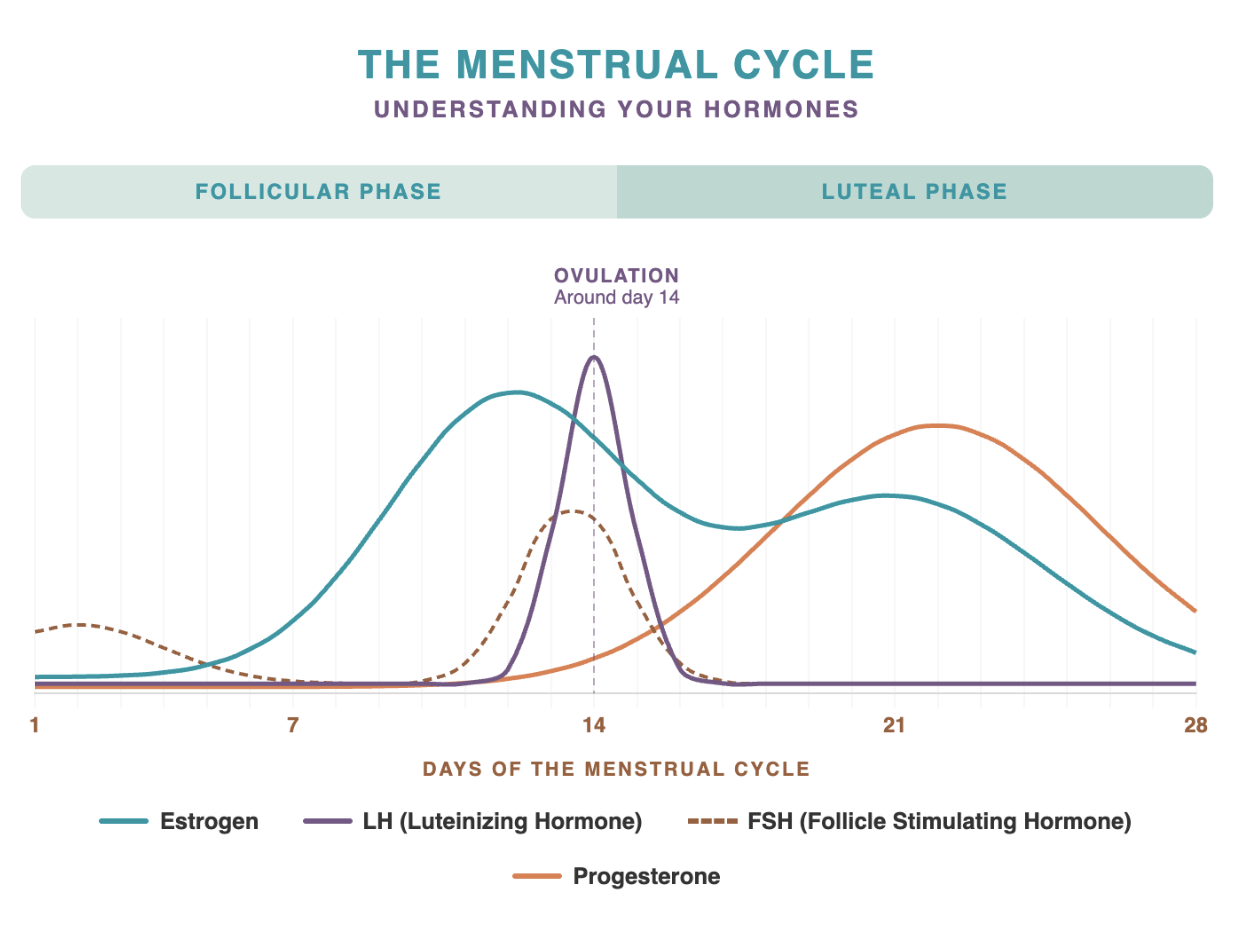
A “textbook normal” cycle is reasonably regular, with a manageable flow, and without symptoms that derail your week. But, and this is the important part, normal doesn't always mean optimal.
What We See a Lot in Practice
Here's something we hear constantly: “My bloodwork came back normal. My cycle is textbook. But I still don't feel like myself.”
If that sounds familiar, you're not imagining it. Standard test ranges are often quite wide, and “within range” isn't always the same as optimal. Some of the most common things we see in practice include:
Period pain that's brushed off as “just part of being a woman”
PMS that affects mood, sleep, or energy every single month
Low iron, which can quietly drain your energy for weeks at a time
Thyroid symptoms, like fatigue, weight changes, brain fog, that don't always show up clearly on standard testing
Endometriosis and PCOS, both common but still frequently under-recognised
Perimenopause symptoms affecting sleep, moods, energy and concentration
None of these are things you have to just live with. They are signals that your hormones may be out of balance during parts of your cycle.
Why Your Cycle Matters, Even If You’re Not Trying to Conceieve
Here's a myth we want to bust: hormone health isn't just about fertility.
We often hear women say something like, “I don't need to worry about my hormones, I don't want kids.” But your cycle reflects so much more than reproductive function. Oestrogen and progesterone influence your brain health, gut health, energy, mood, sleep, bone strength, and more. A well-regulated cycle is a sign of a well-regulated body, whatever your family planning goals are.
How We Can Help
Chiropractic care won't fix a hormone imbalance directly, but it plays a genuine supporting role. Your nervous system and your hormonal system are closely connected and when your body is under physical or mental stress, it can show up in your cycle too. Chiropractic adjustments support your nervous system regulation is one piece of a bigger picture that also includes nutrition, movement, sleep and stress management.
A Few Practical Places to Start
Track your cycle. A simple app or diary can reveal patterns you'd never notice otherwise including energy dips, mood shifts, or symptom timing.
Prioritise the basics. Sleep, whole-food nutrition, and appropriate exercise all directly support hormone regulation.
Don't dismiss your symptoms. If something feels off month after month, it's worth a conversation, even if your last test results came back “normal.”
If any of this feels familiar, know that you don't have to just push through it. Women's health is something we care deeply about here at the practice, and it's a topic we'll keep coming back to so if there's something you'd love us to cover, let us know.
Have a question about your own cycle or hormone health? Book a time to chat with Dr Georgia.